
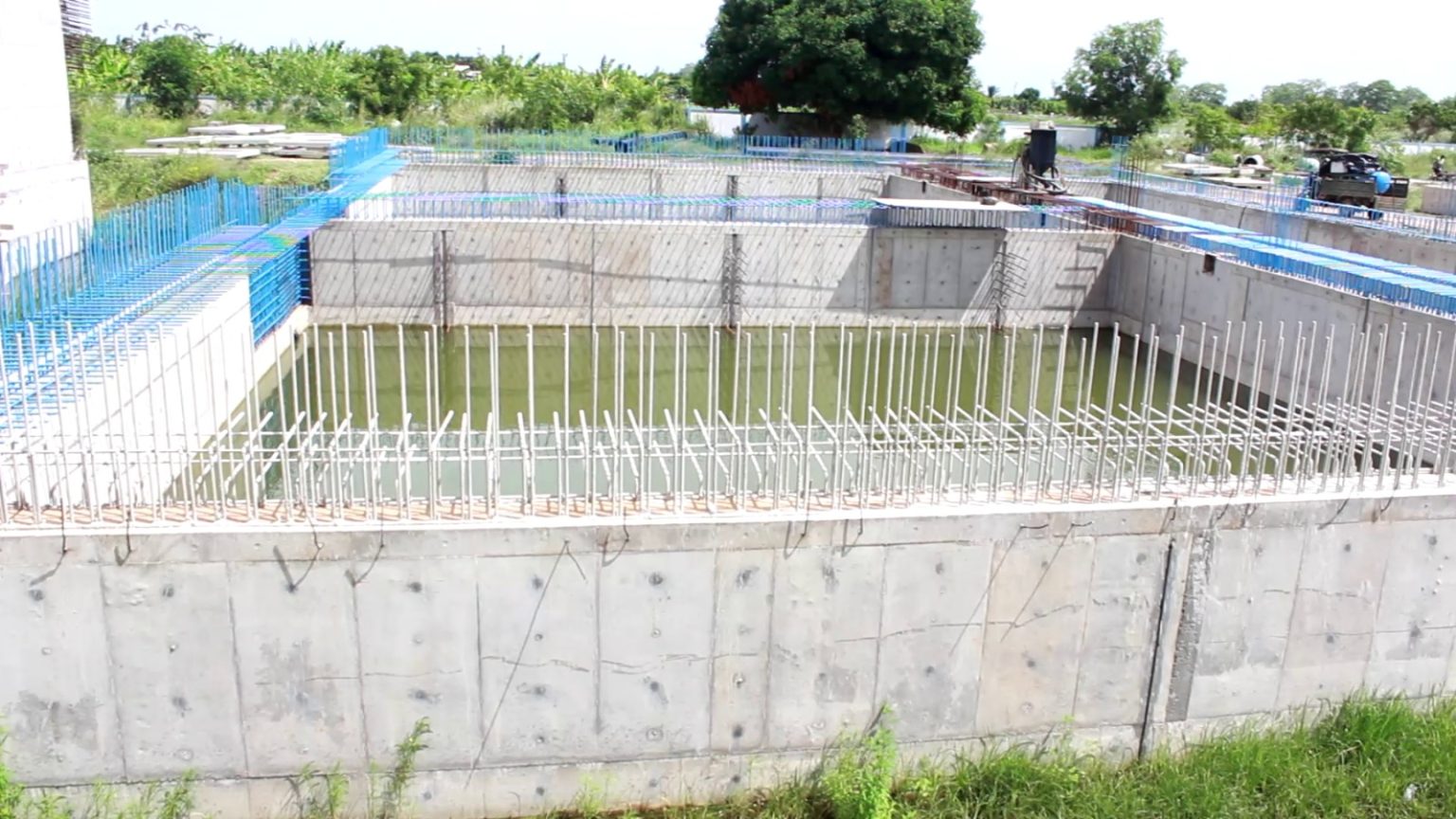
For thousands of residents across Keta in the Volta Region, access to clean running water remains a daily struggle despite a one billion cedi (€85 million) project that was supposed to solve the problem years ago.
What was conceived as one of the most ambitious water infrastructure projects in southern Ghana has instead become a symbol of chronic delays and unfulfilled promises.
More than a decade after the contract was awarded, and nearly three years after its original completion date, many of the communities the project was designed to serve are still waiting for water to flow through their taps.
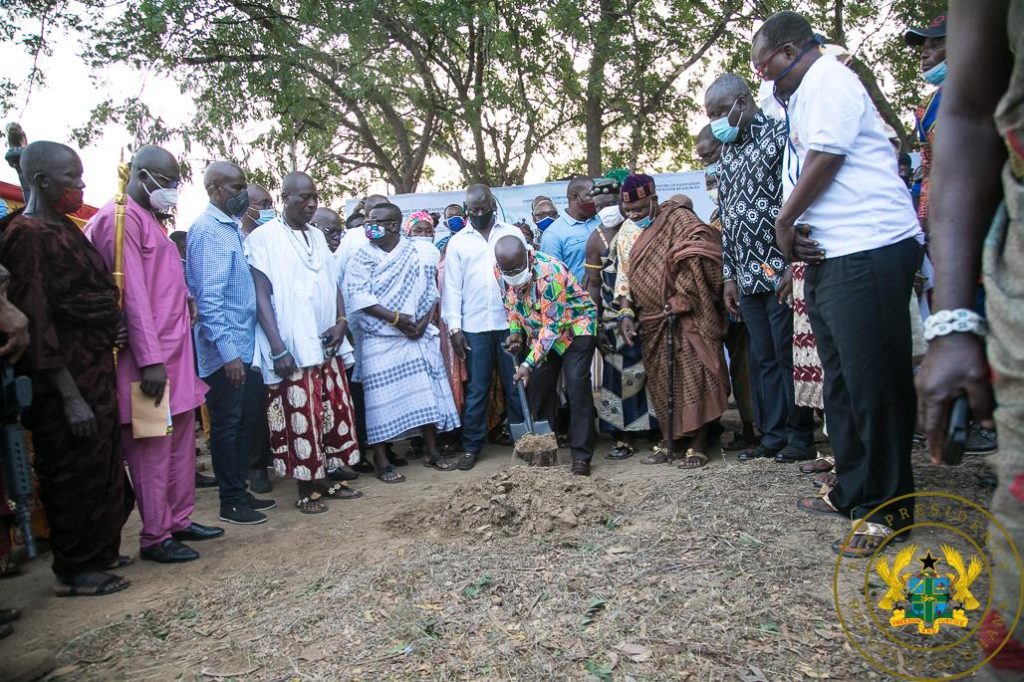
In one community, an elderly woman who identified herself only as Sister Chris wakes up every day at midnight to collect water when the taps briefly come to life.
“The water issue is very problematic. I have to wake up at 12 midnight, and fill the tank,” she says. “Before 8am, it stops. We can’t continue living our lives like this.”
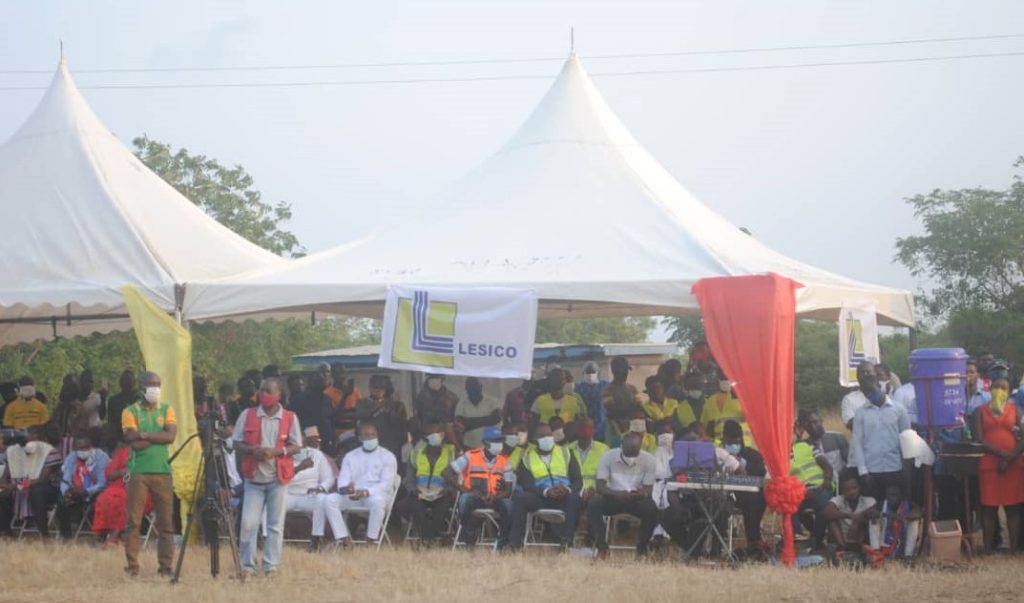
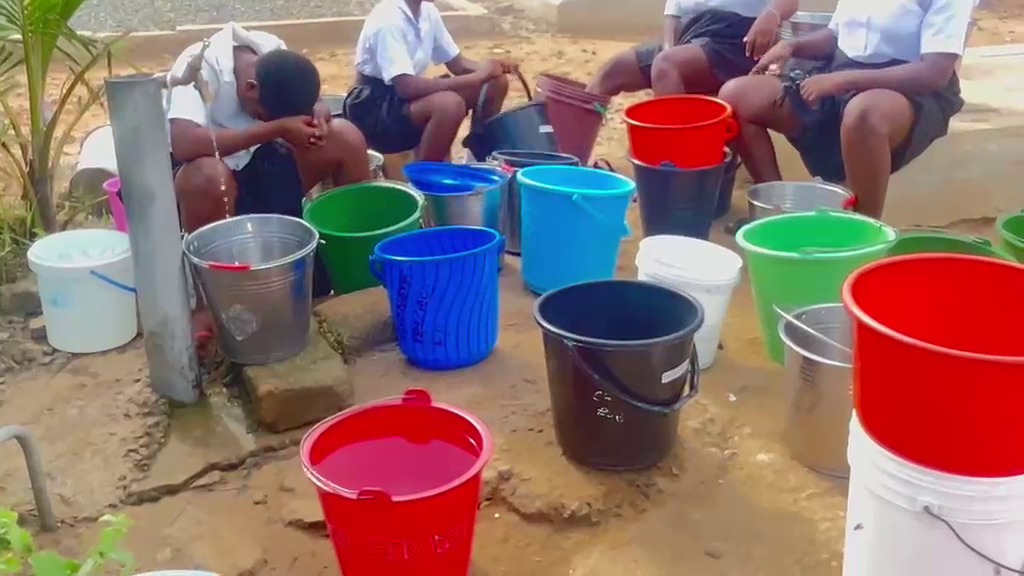
The scarcity affects almost every aspect of daily life. Students at the local nursing training institution say access to water has become a constant struggle, forcing them to spend valuable study hours searching for water to bathe, wash clothes, and meet basic household needs.
“Sometimes the water only comes in drops, and we have to queue for hours with buckets hoping to get enough for the day,” says Kate Akpene, a student nurse. “Instead of studying or resting after lectures, we spend time looking for water. It is frustrating because it affects our learning, our health, and our daily lives.”
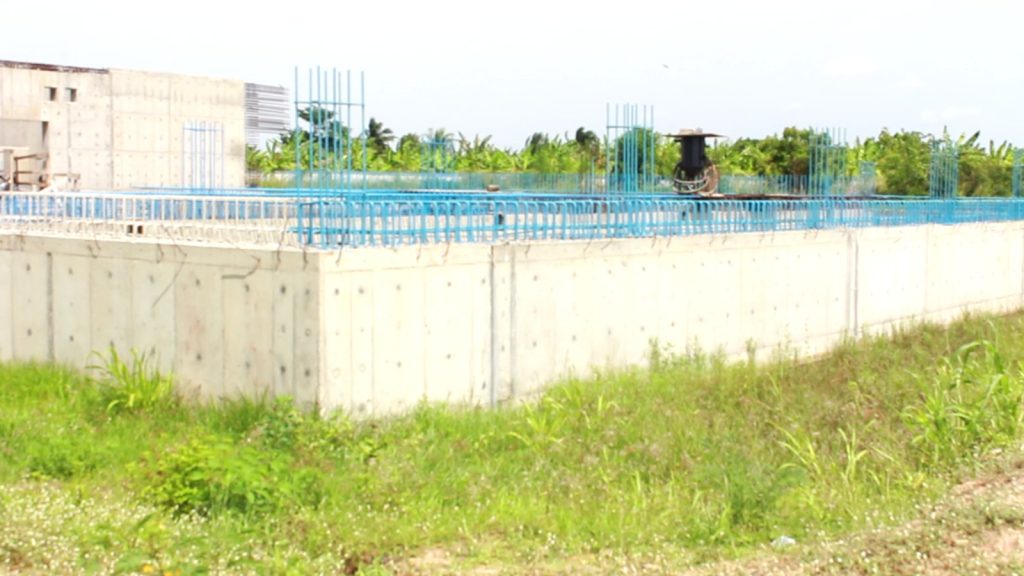
The expansion and rehabilitation of the Keta Water Supply Project was intended to improve water access across about 65 communities in the Volta Region, including Sogakope, Agordome, Dabala, Anloga, Keta and Aflao.
Instead, residents continue to rely on boreholes, water barrels, and irregular water flows while a project meant to end their hardship remains unfinished.
A decade of delays
The project was awarded on 21 March 2014 when the Ghana Water Company Limited (GWCL) signed a contract with Messrs Lesico Infrastructures S.R.L. An addendum was later signed on 19 March 2019.
Valued at €85,112,854, the project was financed through a credit facility secured by the Government of Ghana from Deutsche Bank and backed by the Italian Export Credit Agency (SACE). The contract was executed by Lesico Infrastructures S.R.L., the Italian subsidiary of the Israeli construction group Lesico. To oversee implementation, GWCL engaged Deference Engineering Limited as the independent supervising consultant responsible for monitoring construction activities.
Actual construction did not begin until 28 April 2021, seven years later after the contract was signed. The project was originally expected to be completed by 28 December 2023. That deadline passed.
A revised completion date of 30 April 2024 was also missed, as was a second deadline of 1 January 2026. The latest target is now 31 October 2026.
But even that date appears increasingly unrealistic. Project records show overall progress at 74.4%, with physical works estimated at about 72.1% as of June 2026.
On paper, those figures suggest substantial progress. On the ground, however, consultant reports paint a different picture. Construction activity has slowed significantly, and in some areas, work has virtually stalled.
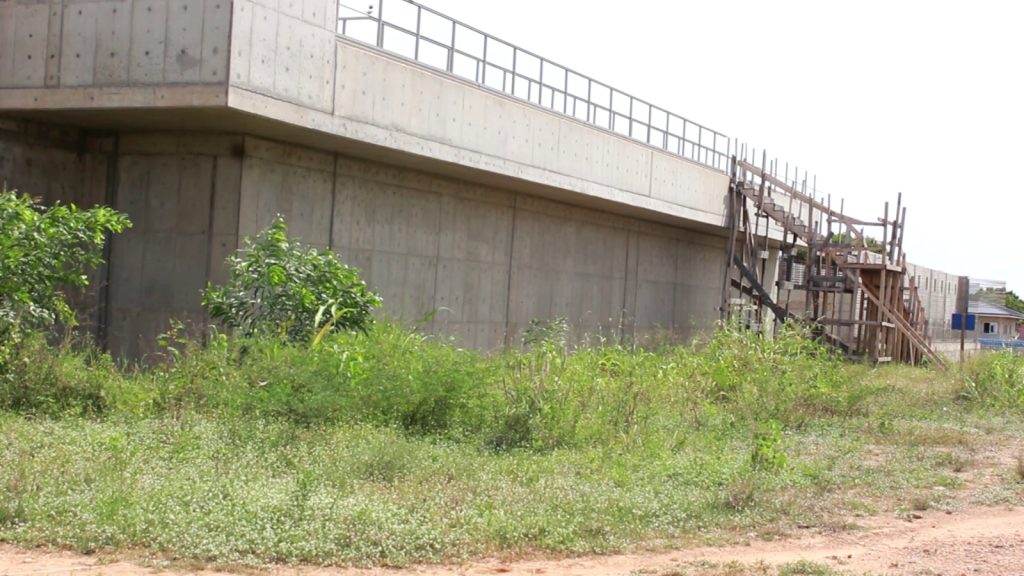
The slowdown has become so severe that some exposed metal structures have reportedly had to be repainted simply to prevent deterioration while the project remains unfinished.
According to the supervising engineer, Kwabena A. Koranteng, the contractor remains on site but has been severely constrained by persistent delays in payment.
The last payment received by the contractor was in July 2024.
According to project documents cited by The Fourth Estate, the unpaid certificates totalled €3.7 million as of September 2025. The mounting debt has triggered repeated requests for intervention.
On 13 November 2025, the Managing Director of GWCL formally appealed to the Minister for Works and Housing and Water Resources to facilitate payment of outstanding sums.
While disruptions caused by the COVID-19 pandemic and the Russia-Ukraine war have been cited as contributing factors, sources familiar with the project say delayed payments have become the dominant obstacle.
The cash-flow challenges have slowed construction, increased costs, and undermined confidence in successive completion dates.
Recognising the delays, GWCL’s Managing Director, Adam Mutawakilu, approved another extension on 18 December 2025, moving the completion deadline from 1 January 2026 to 31 October 2026.
Yet engineers working on the project now concede that even this revised timeline may prove difficult to achieve without the release of outstanding funds.
Meanwhile, across Agordome, Anloga, Keta, and dozens of other communities, the promise of reliable water remains frustratingly out of reach. Many households continue to depend on boreholes and alternative sources while critical sections of the project remain incomplete.
Repeated attempts by The Fourth Estate to obtain responses from the Ministry of Works and Housing regarding delayed fund releases and outstanding payment certificates yielded no results.
The author, Mamavi Sephakor Tay, is a 2026 Fellow of the Next Generation Investigative Journalism Fellowship (NGIJ), Cohort 8, at the Media Foundation for West Africa.
Become a member of The Fourth Estate community
For 5 years, we've investigated matters of public interest and helped hold power to account.
Now we're launching our Membership Programme, a community of people who believe independent journalism is worth sustaining, and want to help us do more. Join us as a member, and bring a friend along.
Join the community now
Kamshegu Water Crisis: CSIR tests reveal bacterial contamination, dam water declared unsafe for drinking
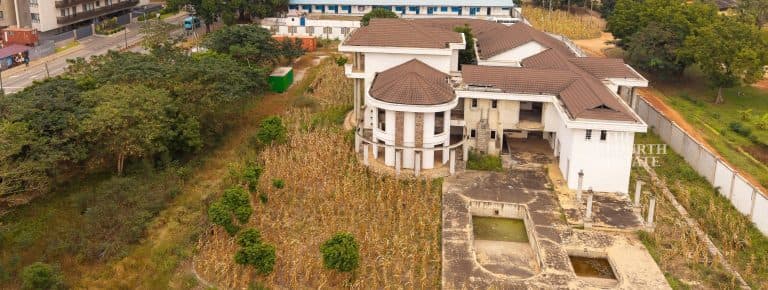
Proposed Vice Presidential Villa abandoned for 13 years after over $ 2.4 million spent
Four years after collapse, Navio bridge still claims lives
MFWA establishes GHS 544,000 Legal Support Fund for journalists in Ghana
Comments
No comments yet. Be the first to share your thoughts on this story.