

A government initiative to use sanitation guards to help improve cleanliness in communities across the country has all but come to a standstill as many of the guards have stopped working over the non-payment of their allowances.
This is in spite of the fact that the company that was contracted to manage the guards, Zoomlion Ghana Limited, has been paid millions of cedis, monies the sanitation guards claim they saw very little of.
In a response to a Right to Information request, the Ministry of Finance disclosed to The Fourth Estate that in 2022, the government paid Zoomlion GHS37.12 million to manage and pay 4,000 sanitation guards nationwide.

Joseph Siaw Agyepong
However, most of the sanitation guards who spoke to The Fourth Estate said they were hardly ever paid – and even when they were paid, the money was nowhere near enough to cover their most basic living expenses. As a result, they have either stopped working completely as sanitation guards or are actively looking for alternative employment.
In Asutuare in the Eastern Region, Rejoice Nyakpo, said she is paid a paltry GHS100 per month even though she has worked as a sanitation guard for more than 10 years.
“Even that one, it doesn’t come regularly,” she told The Fourth Estate. “The last time they paid us was December 2023.”
Rejoice survives by selling the street delicacy made from spicy, fried ripe plantains, kelewele, in the evenings.
“I am a single mother. I sell kelewele every evening. That business’s profit is what I use to cater for myself and my son,” she said.
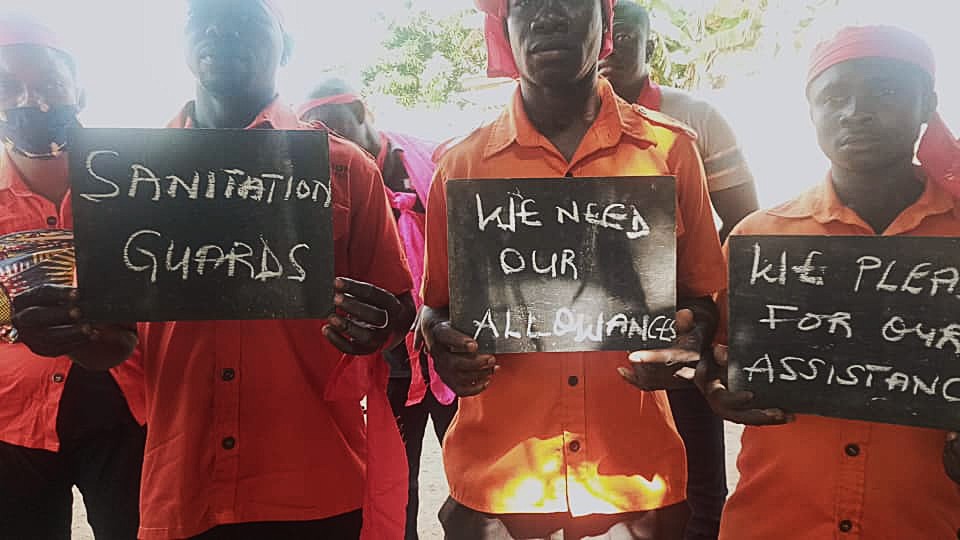
The Fourth Estate has found that across Ghana, thousands of sanitation guards have either stopped working, or, have not been paid for years.
Seth Bekoe and Charlotte Yeboah, who are sanitation guards in the Akuapem North and Birim South districts, respectively, said most of their colleagues have quit.
An environmental health officer in Ada East, Frank Opoku Abima, whose task is to supervise the guards, told The Fourth Estate that the project under which they were recruited has “collapsed for a very long time”.
Mr Abima said all 15 recruited guards for the district have stopped working because of the poor working conditions.
Agnes Korletey, an officer in the Shai-Osudoku district, also said she now supervises only two guards. She said the number has reduced from seven. And the two who are left, she added, “have not been paid for about two years now”.
Even though a good number of the sanitation guards have quit, Zoomlion received payments for 4,000 guards in 2022 – the same number originally recruited when the programme was launched in 2008.
The Fourth Estate has not found any public record of a nationwide headcount, payroll verification, or performance audit confirming that those 4,000 guards were still active when the funds were disbursed.

A Development Consultant and Project Management Professional, Dr Daniel Kwame Ampofo Adjei, PMP., told The Fourth Estate that most of the GHS37.12 million should have gone to the payment of the sanitation guards.
“Public procurement principles, including Ghana’s Procurement Act, 2003 (Act 663) as amended, emphasise value for money, meaning that most of the funds are normally expected to go directly to service delivery, in this case, payments to the sanitation guards,” he said.
Dr Ampofo Adjei further noted that it is uncommon for a company to be even paid half of the total amount of a project as management fees.
“In labour-based projects of this nature management fees are commonly in the range of about 5% to 20% of the total contract value, depending on complexity, risk, and scope,” he said. “It would therefore typically be considered unusual for management fees alone to approach half of the total amount.”
Beyond unpaid allowances, a guard who has worked for nearly eleven years in the Yilo Krobo Municipality, Ofori Ayisi, said Zoomlion has failed to provide them with basic tools to work.
“Sometimes, I really regret it because we were only given uniforms twice since we started, and that was all,” Ofori said. “It was only last year [2024] when we went for a meeting that they gave us [polo shirts]. They didn’t give us bicycles or raincoats.”
But Dr Ampofo Adjei said the payment description indicates that “the amount stated mainly involved managing and paying workers rather than supplying major equipment or infrastructure, although this can only be confirmed by reviewing the full contract documents”.
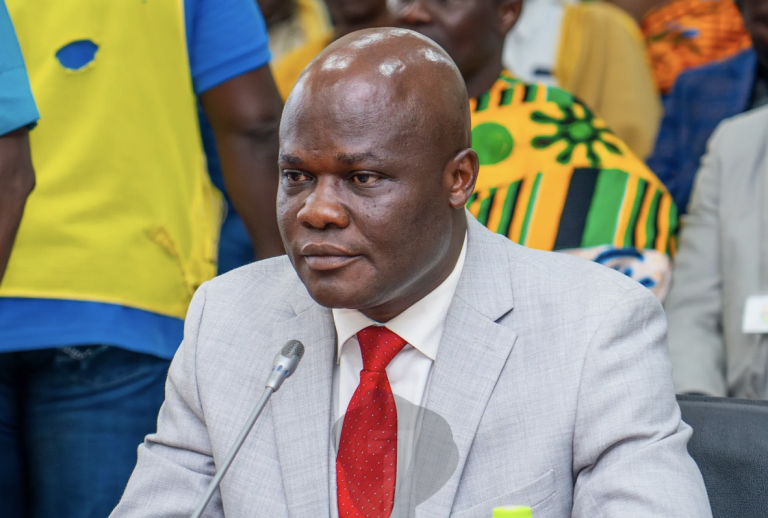
On June 18, 2025, The Fourth Estate requested from the Ministry of Local Government, Chieftaincy and Religious Affairs the full list of sanitation guards across the country, all payments made to Zoomlion for the programme’s implementation and the contracts based on which the company has been paid over the years.
A month later, the Ministry responded that it had deferred the release of the information because it was preparing same for another applicant. After a long wait, The Fourth Estate petitioned the Right to Information Commission to compel the Ministry to release the information.
In a letter dated November 10, 2025, the Commission wrote to the current Minister of Local Government, Mr Ahmed Ibrahim, to provide the information within seven days. But the ministry has failed to do so.
Zoomlion has also not responded to an interview request submitted on November 3, 2025.
Become a member of The Fourth Estate community
For 5 years, we've investigated matters of public interest and helped hold power to account.
Now we're launching our Membership Programme, a community of people who believe independent journalism is worth sustaining, and want to help us do more. Join us as a member, and bring a friend along.
Join the community now
Property rate sham: How assemblies lost millions of cedis through questionable deal with Jospong-linked Company
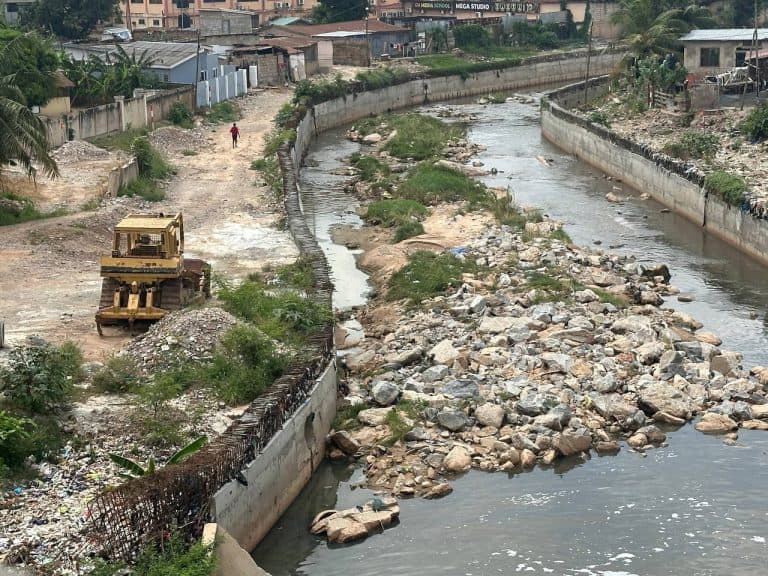
Abandoned $14 million World Bank-funded Alogboshie drainage project leaves residents in fear

How Transport Ministry spent GHS394,000 daily on COVID-19 airport disinfection

Billions in Sanitation Levy Collected, yet Deaths and Piles of Waste Mount
Comments
No comments yet. Be the first to share your thoughts on this story.