
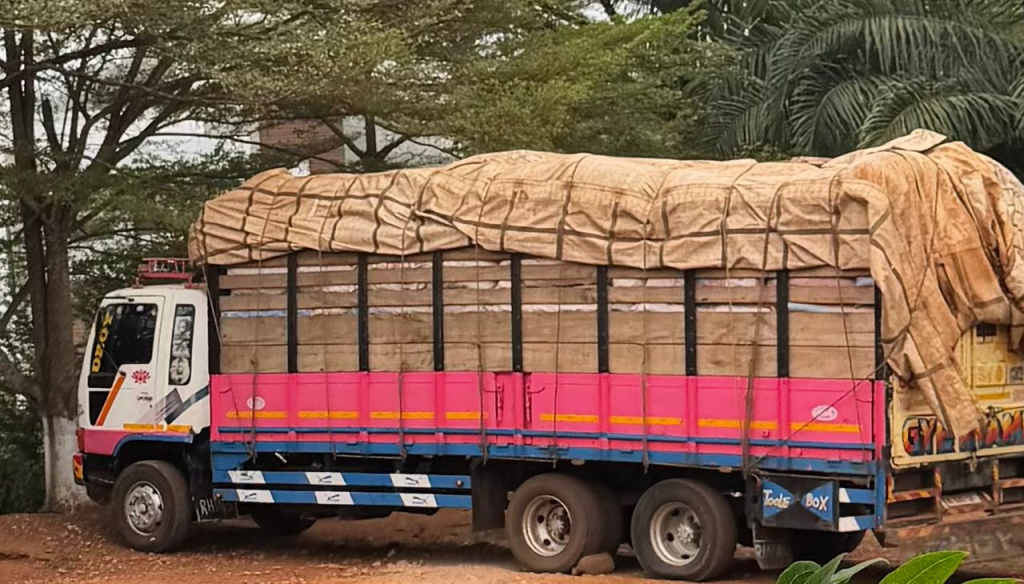
When two Kia Rhino trucks carrying assorted food items arrived at the Customs Checkpoint at Techiman in the Bono East Region, on January 13, 2026, everything looked routine. There was nothing fishy about the trucks and the goods in them.
But what the truck drivers did not know was that the customs officials had received a tip-off, prompting them to subject the vehicles, with registration numbers AS6081-18 and AS8448-13, to a thorough search.

While the vehicles were being searched, a Benz truck with registration number AS4859-P sped across the checkpoint. The Customs Patrol Team of the Sunyani Sector chased and arrested the driver and impounded the truck.
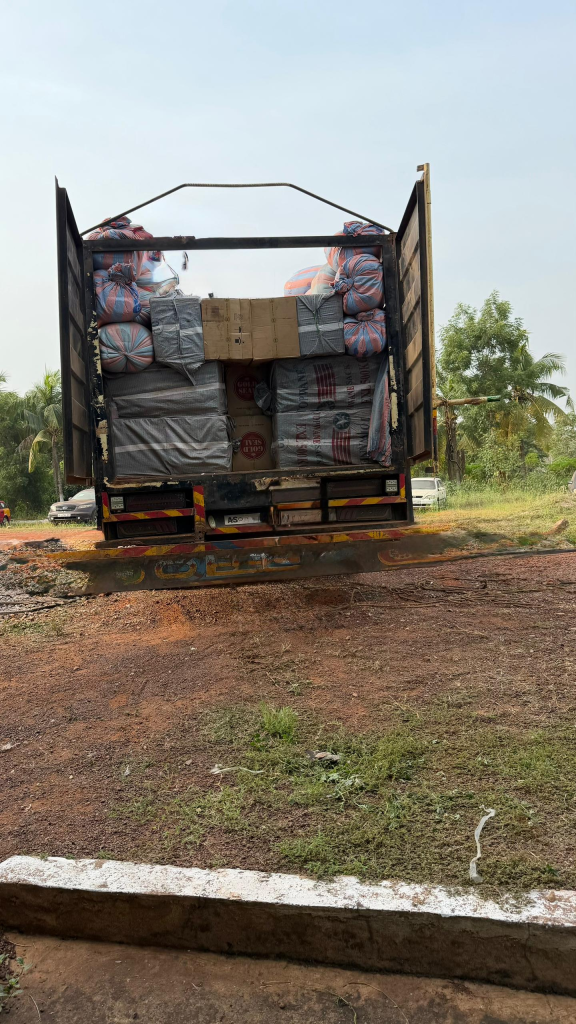
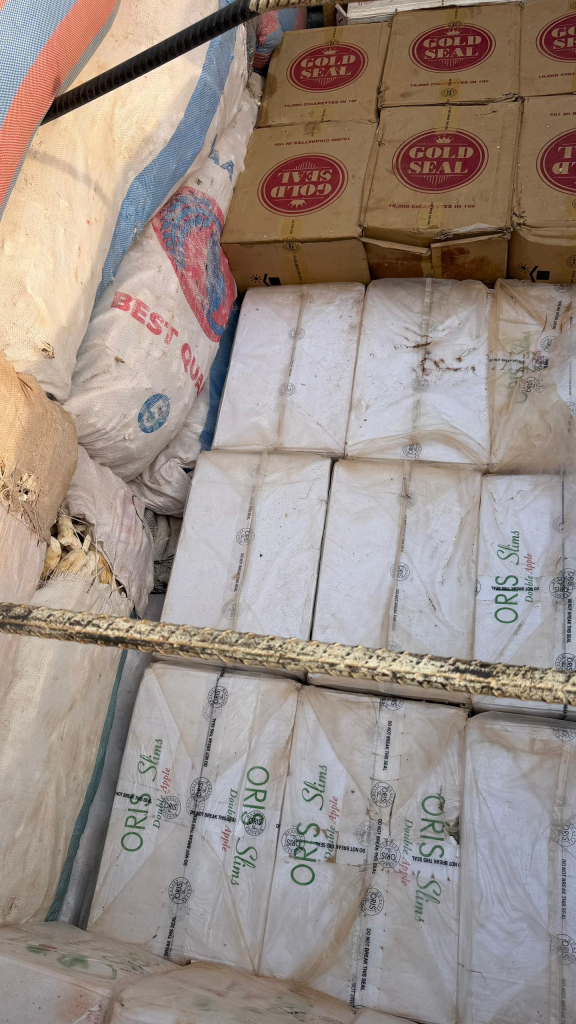
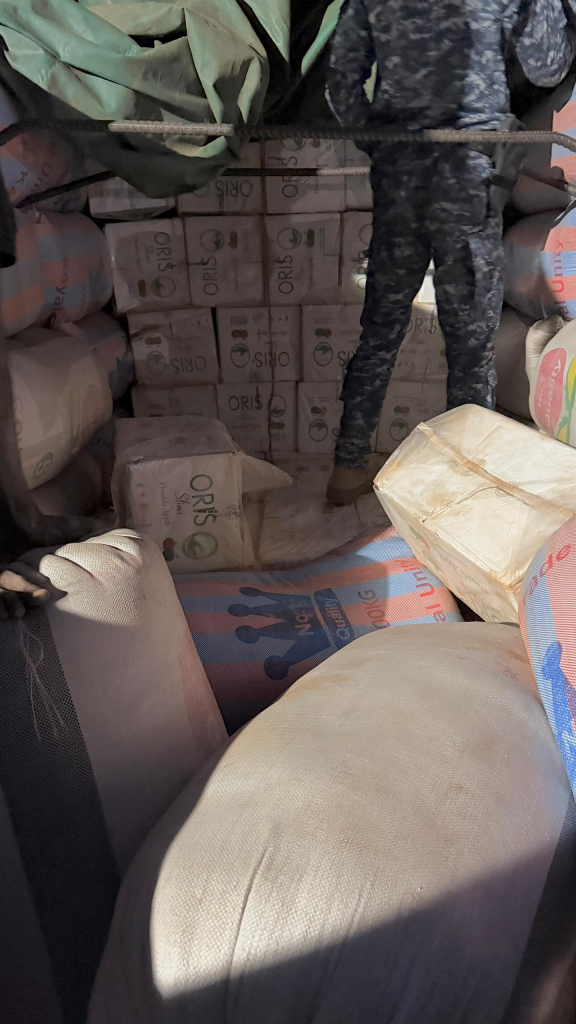
The three trucks were then escorted to the Sector office in Sunyani, where various brands of cigarettes, which were concealed under sacks of cassava flour, charcoal, maize, and poultry feed, were retrieved.
Sources close to the Customs in Sunyani told The Fourth Estate that the seized cigarettes were made up of 4,750 boxes of Oris Slim; 3350 boxes of Gold Seal and 162 cases of Gold Seal.
The sources said that the owners of the smuggled goods had for days refused to come for an inspection of the seized items and the impounded trucks. However, the alleged smugglers succumbed to the inspections when politicians and opinion leaders could not prevail upon the Customs officials to release the contraband goods for them.
When The Fourth Estate contacted the Sunyani Sector Commander of Customs, Charles Owusu, he declined to speak to the issue.
However, industry officials, who spoke on condition of anonymity, said smuggling is a huge problem in the Sunyani Customs Sector, which comprises the Bono, Bono East, and Ahafo regions.
The sources said the cigarettes were not only seized for non-payment of duty but also because they were restricted products, for which importation was permitted by accredited dealers only.
According to the sources, accredited dealers, in addition to paying substantial duties on cigarettes, must comply with strict packaging regulations, including the mandatory use of tax stamps—a government policy used to distinguish legally imported cigarettes from smuggled ones.
The smuggled ones, which do not bear the tax stamp, are not approved for the Ghanaian market.
When asked whether the seized cigarettes would be released after payment of duty, the industry source said the convention was that “the cigarettes would be destroyed, according to the law and established practice, while the vehicles involved would pay huge penalties or face seizure.”
Ironically, The Fourth Estate was told that one of the drivers questioned the continued detention of the vehicles since they were ignorant carriers of the cigarettes.
Given the serious public health risks associated with cigarettes, Ghana’s law requires all cigarette products to be certified as wholesome by the Food and Drugs Authority.
According to the Tobacco Control Regulations, 2016 (L.I. 2247), a person must not import, manufacture, or sell a tobacco product unless the person and the product are registered by the FDA, effectively tying market access to FDA approval and certification.
This arrest is not an isolated case.
In March last year, Customs officials in the Northern Region seized contraband goods, including illicit cigarettes and controlled pharmaceuticals, valued at GH¢20.6 million.
Become a member of The Fourth Estate community
For 5 years, we've investigated matters of public interest and helped hold power to account.
Now we're launching our Membership Programme, a community of people who believe independent journalism is worth sustaining, and want to help us do more. Join us as a member, and bring a friend along.
Join the community now
Illegal charges rock Foreign Affairs Ministry’s travel document attestation process

Property rate sham: How assemblies lost millions of cedis through questionable deal with Jospong-linked Company

GBC Director-General challenges Auditor-General’s report on 2023 African Games

Presidency investigations into Big Push sole-sourcing: Did Valerie Sawyerr Committee deliberately put out false information to clear Ministry or it was misled?
Comments
No comments yet. Be the first to share your thoughts on this story.